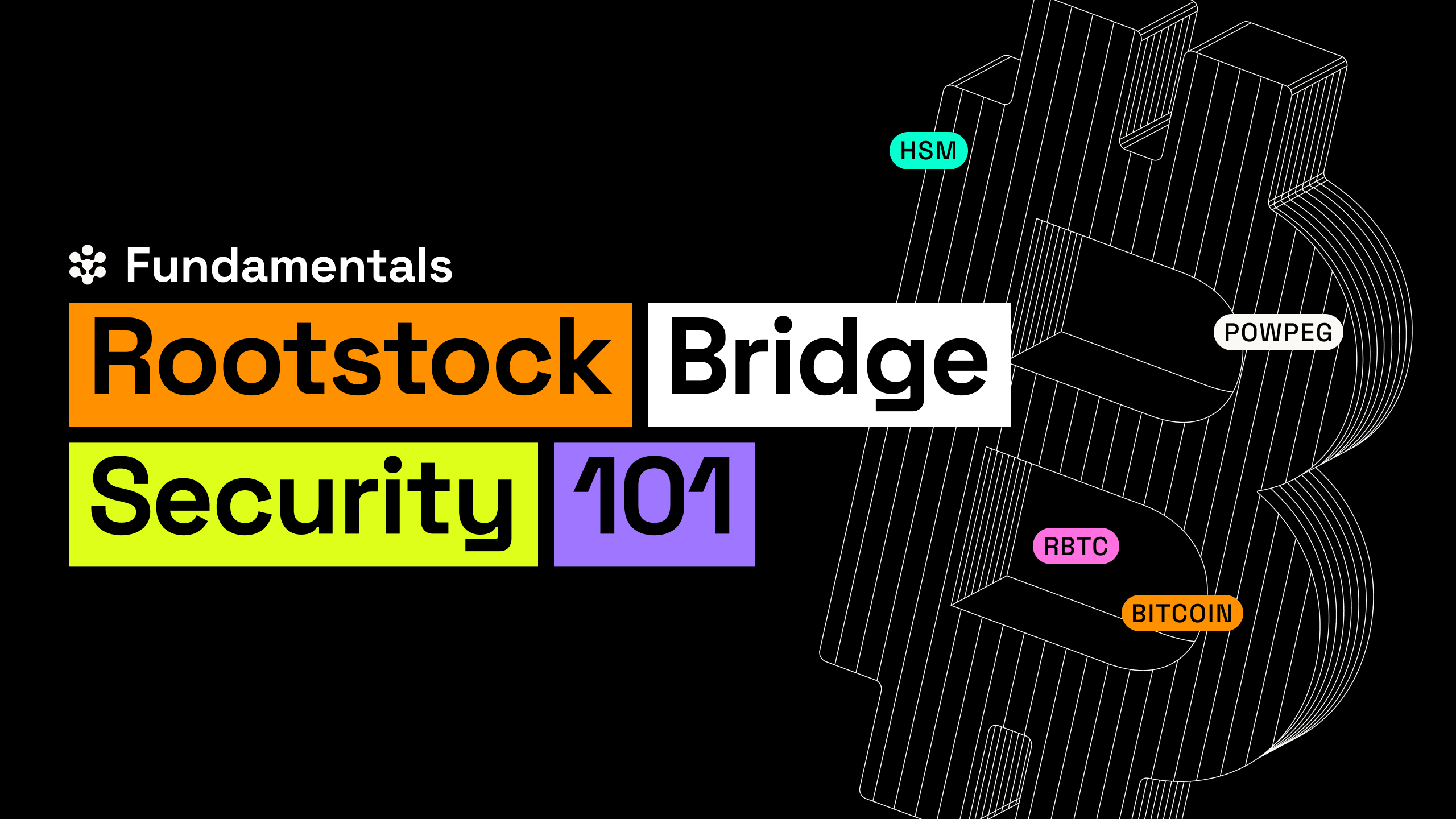
The Rootstock network will undergo a PowPeg Composition Change at Bitcoin block 8,558,281, (estimated around February 23, 2026).
As part of this update, the Bitcoin address used to peg in BTC to Rootstock will change. After activation, users should simply verify the new deposit address before sending BTC, as they normally would.
No other action is required, and regular network operations will continue as usual.
PowPeg’s Signer Set Update
To execute this update, the platform signers completed an on-chain voting process to modify the composition of the current PowPeg. This mechanism ensures that changes to the PowPeg are publicly auditable and executed according to the protocol rules.
With this update:
- Collider will be removed from the PowPeg.
- A new signer operated by RootstockLabs will be added.
- The new signer introduces a Hardware Security Module implementation based on Intel SGX technologies.
Impact on Users
After Bitcoin block 8,558,281:
- The Bitcoin deposit address for peg-ins will change.
- Users must verify the deposit address in the Rootstock Bridge interface before sending BTC.
- The PowPeg Web App will automatically use the correct deposit address.
- No manual migration or additional steps are required.
Peg-out operations and overall network functionality remain unaffected.
Expanding the HSM Model
PowPeg signers have historically relied on dedicated hardware HSM devices. Hardware HSM-based signers will continue to represent the majority of the signer set and remain the predominant operational model within the PowPeg.
This update introduces an additional HSM implementation based on Intel SGX. The objective is to broaden the supported deployment models, reduce reliance on a single vendor or single implementation approach, and facilitate the future onboarding of additional signers, including operators who may prefer running in controlled cloud environments. SGX based signers are expected to represent a minority within the PowPeg.
Recently, the maximum number of supported signers was expanded from 9 to 20. While the PowPeg currently operates with nine active signers, this expansion enables progressive growth over time. Introducing an SGX based HSM aligns with that roadmap by supporting a more diverse operational environment while preserving the existing threshold based security model.
The SGX based HSM implementation is open source and available for review here.
In addition, this implementation underwent an external security audit conducted by Quarkslab.
The Quarkslab audit report is available here.
Closing Note
The PowPeg continues to evolve to strengthen its resilience, transparency, and decentralization while maintaining its established security model.
This Composition Change introduces an additional HSM implementation to support long term growth and technological diversity, without modifying the signing threshold or the current number of active signers.
Rootstock remains committed to the continuous improvement of its Bitcoin bridge infrastructure and to the responsible expansion of the PowPeg over time.
To dive deeper into the ways PowPeg inherits Bitcoin’s security model, click here.